
Gambling Psychology Tricks: 12 Ways Casinos Keep You Playing
Ever walked into a casino and felt a jolt of pure excitement? The endless rows of flashing lights, the symphony of bells and jingles, the collective energy of hope and risk—it’s an intoxicating experience. But this meticulously crafted environment is no accident. It’s a carefully designed stage built on decades of research into human psychology, all aimed at encouraging you to play longer and spend more. This article pulls back the curtain on these powerful casino psychology tricks. By understanding how they work, you can stay in control, make smarter decisions, and ensure your gaming remains a fun form of entertainment.
The Psychology of the Gamble: Key Concepts at a Glance
Before we dive into the specific tricks, it’s helpful to understand the core psychological principles casinos leverage. These concepts explain why gambling can be so compelling and, at times, so hard to walk away from.
| Psychological Concept | Brief Description | Casino Example |
|---|---|---|
| Intermittent Reinforcement | Unpredictable rewards create the strongest habits and cravings. Not knowing when the reward will come keeps you trying. | The random, unpredictable nature of a slot machine jackpot. |
| The Near-Miss Effect | An outcome close to a jackpot doesn’t feel like a loss; it feels like an encouragement to play again. | Slot reels stopping one symbol away from a big win. |
| Gambler’s Fallacy | The false belief that past random events influence future outcomes. | Believing a number is “due” to hit on the roulette wheel. |
| Illusion of Control | The belief that a player can influence a random outcome through skill or ritual. | Blowing on dice for luck or developing a “system” for slots. |
| Loss Aversion | The psychological pain of losing is about twice as powerful as the pleasure of winning an equivalent amount. | “Chasing losses” by making bigger bets to win back money. |
Top Casino Psychology Tricks Used to Influence Players
Armed with this psychological knowledge, casinos—both land-based and online—employ a range of techniques to create the perfect playing environment. Here are some of the most effective ones you’ll encounter in 2026.
- Sensory Overload: The Casino Environment
Land-based casinos are designed to be a “pleasure zone” that separates you from the outside world. You’ll notice maze-like layouts to keep you from finding the exit, a complete absence of clocks or windows to distort the passage of time, and a constant soundtrack of winning sounds (bells, alarms, and celebratory jingles), even from machines paying out tiny amounts. - Abstracting Money: From Cash to Chips
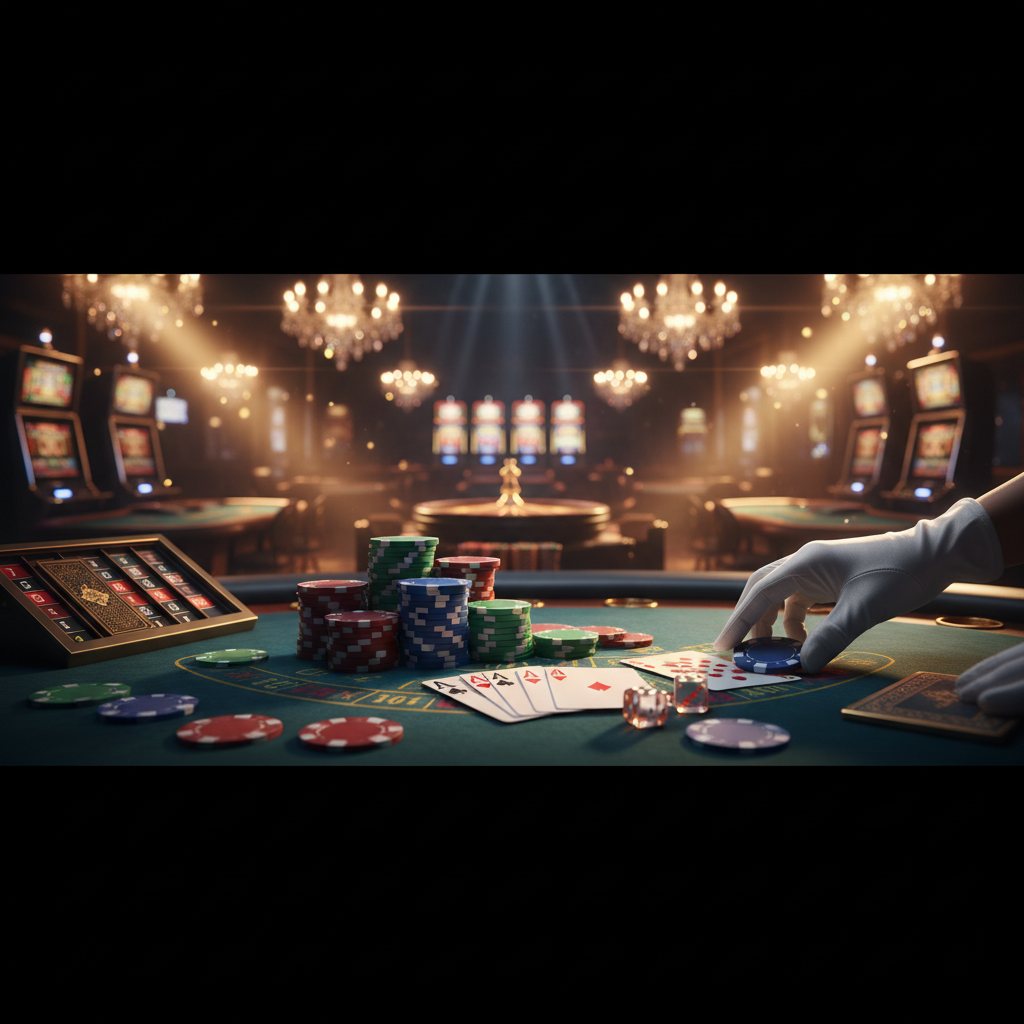
Handing over a $100 bill feels significant. Pushing a few red, white, and blue chips into the betting circle feels like a game. This is intentional. By converting real money into colorful tokens, casinos dissociate you from the real-world value of your wagers, making it psychologically easier to bet larger amounts. - Losses Disguised As Wins (LDWs)
This is a masterclass in modern slot design. Imagine you bet $2.00 and the machine erupts in lights and sounds, celebrating a $1.50 “win.” You still experienced a net loss of $0.50, but your brain registered the positive feedback of a win. This keeps the dopamine flowing and masks your overall financial drain, encouraging continuous play. - The Power of the “Near-Miss”
When the slot reels lock in with two jackpot symbols and the third one stops just one position away, it’s a gut-wrenching moment. But psychologically, it doesn’t feel like a total failure. It feels like you were so close. This powerful near-miss effect triggers a rush of dopamine and a strong urge to spin again, fueled by the belief that a big win is just around the corner. - “Free” Comps and Reciprocity
Free drinks, a complimentary meal, or even a discounted hotel room make you feel valued and special. This taps into the principle of reciprocity—the innate human desire to give something back when something is received. You may feel a subconscious obligation to “repay” the casino’s generosity by gambling for a little longer than you planned. - Gamification and VIP Tiers
Online casinos excel at this. They use progress bars, loyalty points, and status levels (like Bronze, Silver, Gold, Platinum) to make gambling feel like advancing in a video game. Unlocking the next tier or completing a “mission” provides a sense of achievement that is separate from winning or losing money, keeping you engaged with the platform. - The Illusion of Control
Casinos give you choices that make you feel in control of a random event. You choose your “lucky” numbers in Keno, you blow on the dice before a craps roll, or you press the button to “stop” the slot reels (which has no effect on the pre-determined outcome). This illusion satisfies our need for agency and makes us feel like we have a strategy in a game of pure chance. - Social Proof and The Big Winner
When someone hits a huge jackpot, the casino doesn’t keep it quiet. Flashing lights go off, alarms sound, and staff gather around. This public celebration serves as powerful social proof to everyone else, broadcasting the message: “Winning is possible, and it could be you next!” It makes a rare event seem common and attainable.
Recognizing the Dangers: From Psychology to Addiction
While these psychological tricks affect every player to some degree, for some individuals they can contribute to a dangerous cycle of problem gambling. Understanding the line between entertainment and dependency is crucial for your well-being.
The Psychological Causes of Gambling Addiction
Gambling addiction, or ludomania, is a complex condition. The psychological hooks used by casinos can interact with personal vulnerabilities, leading to a serious problem. Key causes include:
- The Powerful Dopamine Feedback Loop: The intermittent reinforcement schedule of gambling can hijack the brain’s reward system, creating a powerful craving for the “high” of the next potential win.
- Escape from Reality: For some, the immersive world of the casino becomes an escape from real-world problems like stress, anxiety, depression, or loneliness.
- Deeply Ingrained Cognitive Distortions: What starts as a simple Gambler’s Fallacy can evolve into a deeply held belief that a system can beat randomness, leading to irrational betting patterns and chasing losses.
Natural Remedies and First Steps for Help
Disclaimer: The following is not medical advice. Severe or suspected gambling addiction requires professional help from a licensed therapist or medical doctor.
For those looking to manage their habits better, there are proactive steps you can take:
- Mindfulness and Awareness: Practice recognizing the urges to gamble as they arise. Simply acknowledging the feeling without acting on it can reduce its power.
- Find Healthy Alternatives: Exercise, new hobbies, and social activities can provide a natural release of dopamine and a healthier sense of accomplishment.
- Seek Support: Groups like Gamblers Anonymous offer a non-judgmental community where individuals can share their experiences and support each other’s recovery.
- Use Responsible Gambling Tools: Modern licensed online casinos are required to offer tools to help you stay in control.
| Tool Type | What It Does | How It Helps |
|---|---|---|
| Deposit Limits | Sets a maximum amount of money you can deposit daily, weekly, or monthly. | Prevents you from chasing losses by depositing more than you planned. |
| Session Limits | Automatically logs you out of your account after a pre-set amount of time. | Breaks the trance-like state of long play sessions. |
| Time-Out / Cool-Off | Temporarily blocks access to your account for a period (e.g., 24 hours, 1 week). | Provides a mandatory break to reassess your gambling habits. |
| Self-Exclusion | A formal process to block yourself from an operator for a long period (e.g., 6 months, 1 year, permanently). | The most effective tool for those who know they have a problem and need to stop. |
Your Defense: Tips for Smart and Responsible Gambling
Awareness is your greatest defense. By consciously recognizing these tricks, you can fortify your logic against their emotional pull. Here is a step-by-step guide to staying in control.
- Master Your Bankroll: This is the golden rule. Before you even start playing, decide on a strict loss limit, a win goal, and a time limit. Treat the money in your bankroll as an entertainment expense—once it’s gone, the show is over.
- Leave ATM/Credit Cards at Home: When visiting a land-based casino, only bring the amount of cash you are prepared to lose for that session. Leave all other forms of payment behind to remove the temptation of withdrawing more money.
- Recognize the Tricks in Real-Time: When you feel the sting of a near-miss, say to yourself, “That’s the near-miss effect.” When you think a number is “due,” remind yourself, “That’s the Gambler’s Fallacy.” Naming the trick diminishes its power.
- Take Regular, Scheduled Breaks: Step away from the screen or the table at least once an hour. Walk outside, get some fresh air, and clear your head. This breaks the sensory immersion and allows your logical brain to catch up.
- Never Chase Your Losses: This is the quickest path to financial trouble. Accept that a loss is a loss. Increasing your bet size to win it back is a strategy driven by emotion (loss aversion), not logic.
- Actively Use Responsible Gambling Tools: Before you even place a bet at an online casino, go to the responsible gambling section and set a deposit limit. It’s the single most effective way to enforce your bankroll rules.
Frequently Asked Questions (FAQ)
What is the $20 method at the casino?
The $20 method is a simple and popular bankroll management strategy for slot machines. A player takes only $20 to a specific machine. If they lose the entire $20, they walk away from that machine, period. If they manage to double their money to $40, they pocket the original $20 stake and play only with the $20 profit. It’s a disciplined way to set a hard stop-loss and protect your initial investment.
What are the 4 E’s of gambling?
The “4 E’s” describe the primary motivations behind why people gamble. They are: Entertainment (playing for fun and as a social activity), Excitement (the thrill and adrenaline rush of taking a risk), Escape (using gambling to get away from boredom, stress, or other problems), and Economic (the hope of winning money and improving one’s financial situation).
What did Albert Einstein say about gambling?
Albert Einstein famously said, “The only way to win at roulette is to steal the money when the croupier’s not looking.” This quote cleverly illustrates a fundamental truth: games like roulette are based on mathematical certainty where the house always has an advantage (the house edge). He was pointing out that no betting system or strategy can overcome a game with a negative expectation in the long run.
Why is 777 used in gambling?
The number 777 has deep cultural significance as a lucky and positive number in many Western cultures and religions, often associated with perfection and good fortune. Early slot machine manufacturers capitalized on this pre-existing belief. By making “777” the jackpot combination, they tapped into a powerful psychological association that players already had with the number, making it the ultimate symbol of a lucky win.
Ultimately, casinos are businesses masterful at using psychology to their advantage. By understanding the casino psychology tricks they employ—from environmental design to the programming of the games themselves—you shift the power back into your hands. This knowledge is the best tool for protecting yourself, managing your play responsibly, and ensuring that gambling remains what it should be: an enjoyable and entertaining pastime.
If you or someone you know is struggling with gambling, please seek help. You can contact the National Council on Problem Gambling or find a local Gamblers Anonymous meeting for support.